Start with the buying situation
Map what customers need to understand, compare and decide, then connect those questions to the relevant offers and pages.
Give SEO, paid search and AI search distinct jobs within a shared strategy. Connect customer demand, landing-page priorities and investment decisions with the commercial outcomes your team needs.
Map what customers need to understand, compare and decide, then connect those questions to the relevant offers and pages.
SEO builds useful discovery; paid search can reach selected demand; AI visibility observations show another part of research. The plan explains their purpose without pretending the measures are interchangeable.
Content, landing pages, technical fixes and measurement can serve more than one channel. Agree the dependencies once and give each action an owner.
Keep channel definitions visible while discussing the same customer and business priority. Record what the evidence supports doing next.
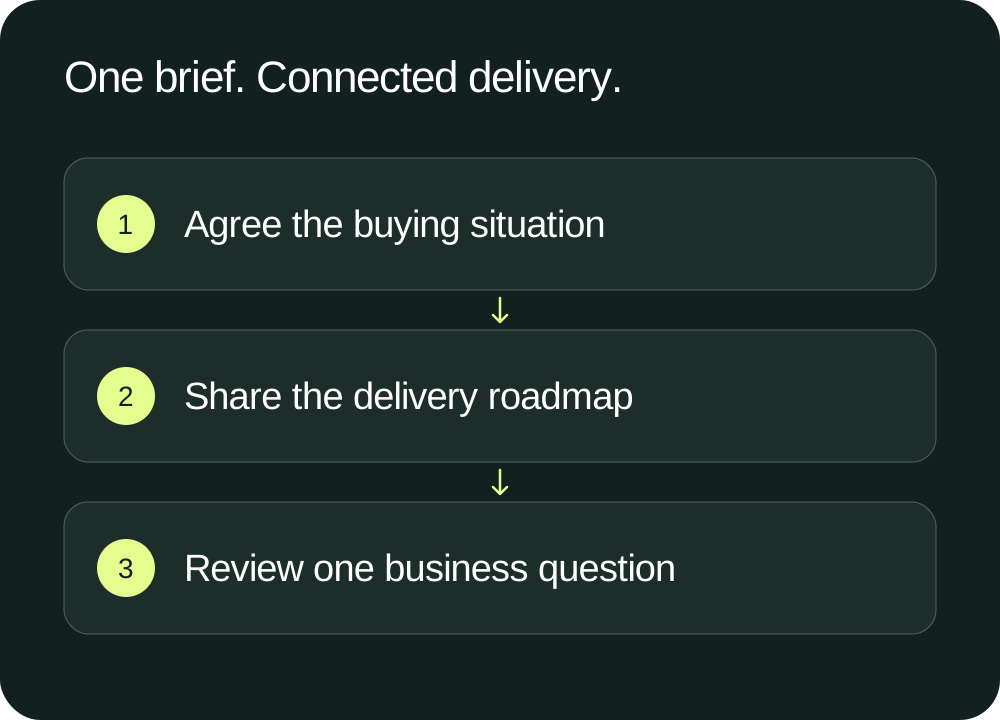
A shared plan brings together page priorities, campaign questions and measurement requirements. It explains what each channel contributes and where work can be shared, without treating their measures as interchangeable.
Useful outputs: A channel-role brief, shared implementation backlog and a common review question.
Useful before expanding spend, changing a website or bringing channel teams together. The output is a demand map, channel-role brief, priority landing pages and an implementation roadmap.
Use a shared decision log to connect channel findings with actions. We agree who owns SEO, paid search, content, development and measurement, whether those people sit with foundibly or your existing partners.
A product category attracts enquiries from the wrong customer segment. The shared brief can separate ad targeting, page explanations and content gaps before the team chooses what to change. That is a planning example, not a reported client result.
Tell us about the journey or decision you want to improve. We’ll work out a useful scope together.